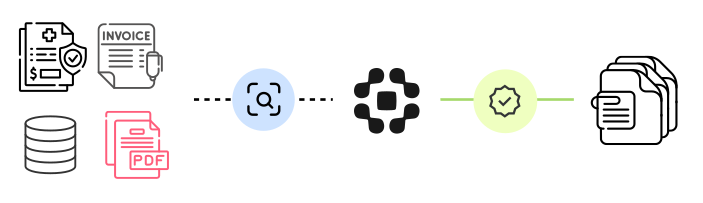

Document classification and extraction
Entire claim file ingested and classified. FRS canonicalization maps varied fields to a canonical schema regardless of format.
Use Cases
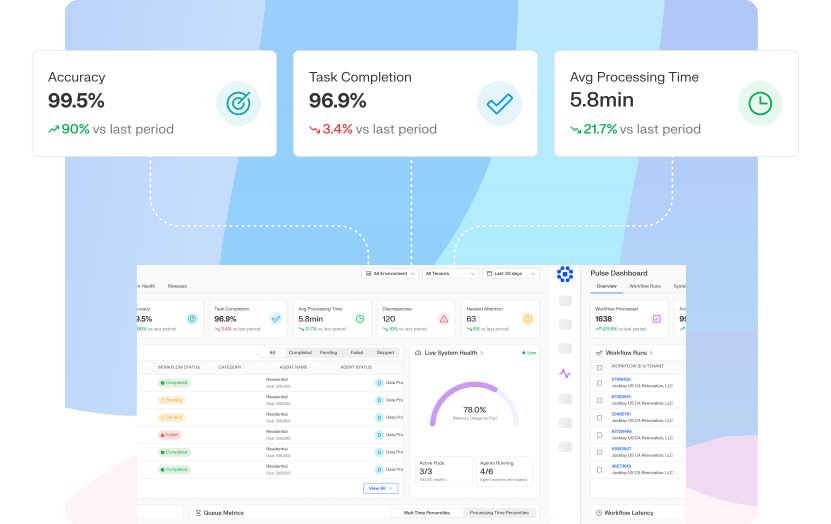
MightyBot automates insurance claims end-to-end — document classification, data extraction, policy evaluation, and state regulatory compliance. Production-grade. Audit-ready.
Why MightyBot
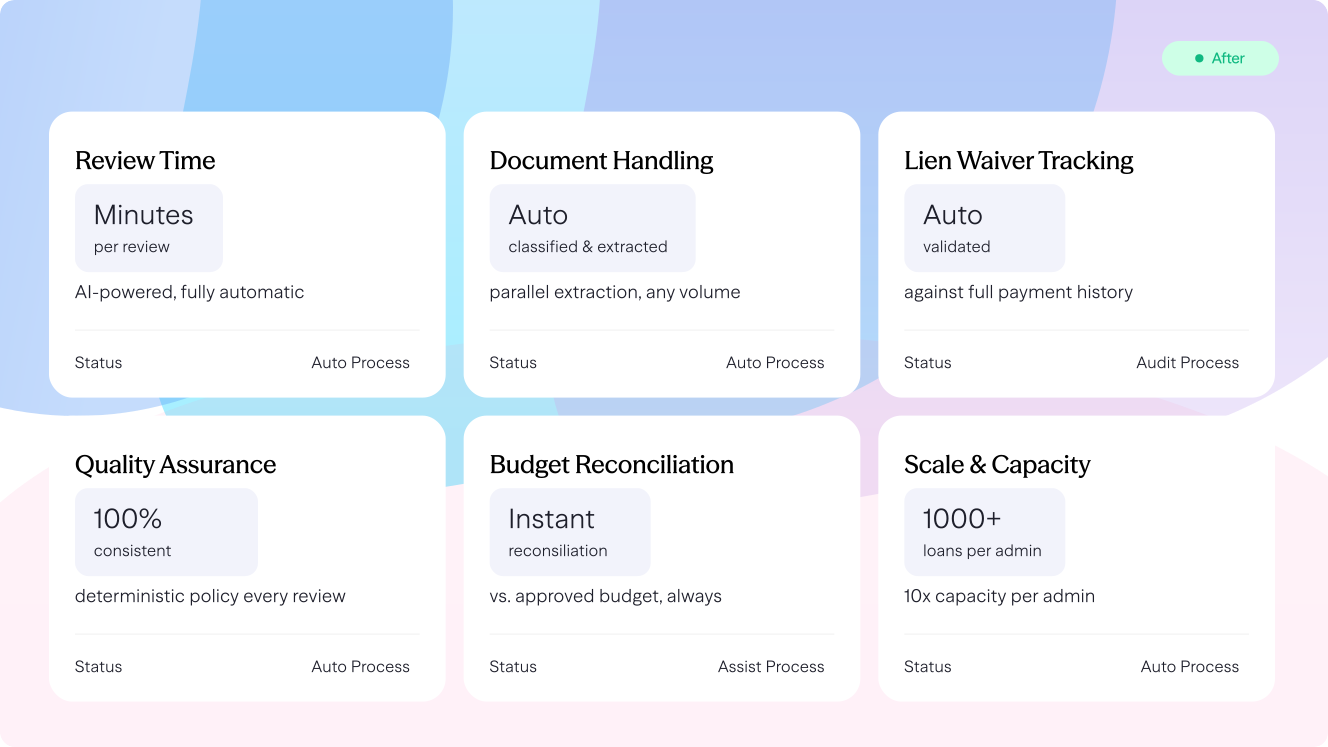
MightyBot executes insurance claims processing from intake to determination. Documents classified. Data extracted. Coverage evaluated against policy terms. State regulations enforced. Every decision traced to the clause, the data, and the source page. Not assisted. Finished.
A single claim file: medical records, police reports, photos, repair estimates, policy declarations, claimant correspondence — often 100+ pages in formats no two processors agree on. MightyBot classifies every document, extracts the data, evaluates coverage, and enforces state-specific regulations in minutes.
Entire claim file ingested and classified. FRS canonicalization maps varied fields to a canonical schema regardless of format.

Coverage terms, exclusions, sublimits, endorsements encoded as executable logic. Same claim, same policy, same result. Deterministic.

State-specific requirements enforced automatically. Timelines, notice obligations, fair claims practices. Updated in plain English by your compliance team.

High-value claims, coverage disputes, fraud indicators routed to adjusters with full context. Edge cases handled.
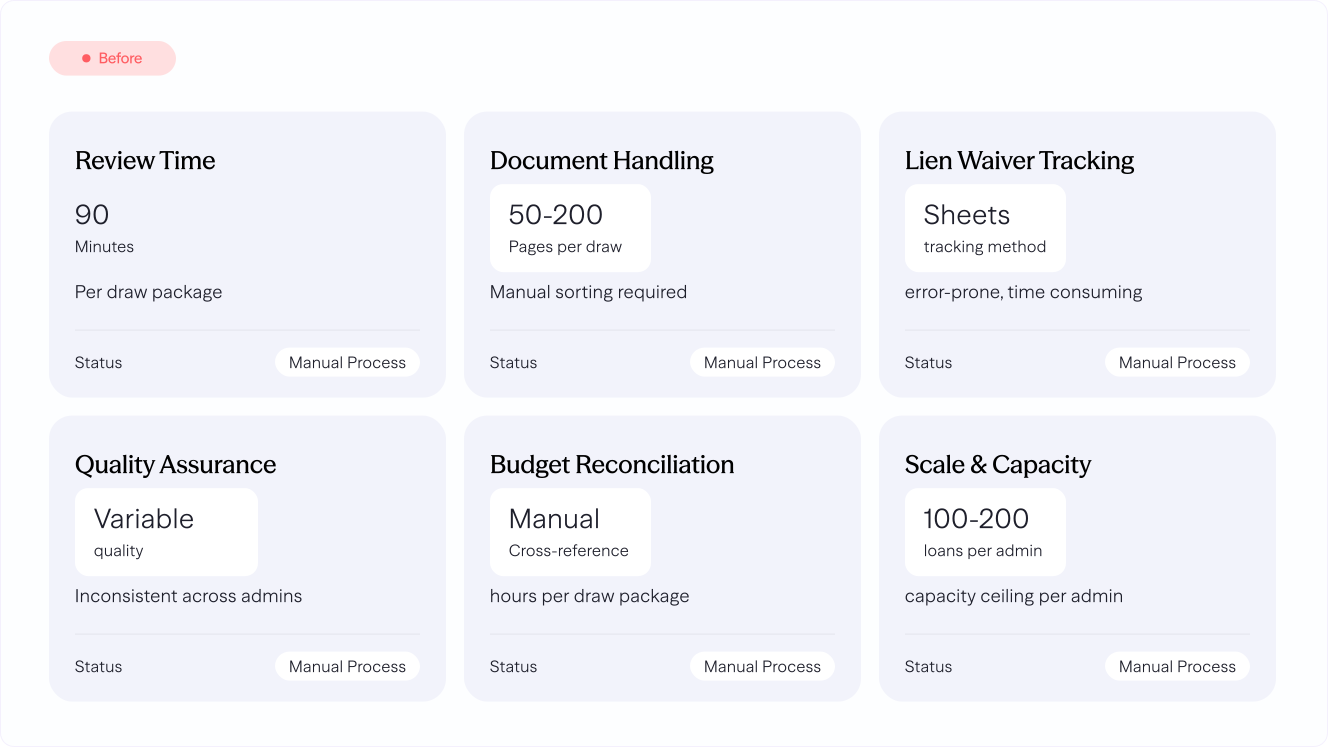
Adjusters must review every document, extract facts, and cross-reference against policy language, coverage limits, deductibles, and exclusions. State-specific claims handling standards vary by jurisdiction. At volume, carriers choose between hiring more adjusters or accepting inconsistent outcomes and regulatory scrutiny. Adjusters spend 70%+ of their time gathering information — not making coverage decisions.
Medical records, police reports, photos, estimates, declarations from every party in different formats
Policy terms, exclusions, sublimits, endorsement interactions per claim
Processing timelines, documentation requirements, fair claims practices vary by jurisdiction
Two adjusters evaluating the same claim reach different conclusions
Every determination must withstand regulatory examination
FAQ
The Policy Engine evaluates each peril against its applicable coverage section, handles stacking and sublimit interactions, and produces a consolidated determination with evidence pointers for each component.
State requirements are encoded as policy rules in plain English. Your compliance team authors and maintains them. When regulations change, rules are updated with version-controlled tracking and enforced by jurisdiction.
PDFs, scanned images, photos, varied form layouts, medical records, police reports, repair estimates, declarations, endorsements, adjuster notes, correspondence, and damage photos. The pipeline classifies and extracts from all of them.
No. MightyBot connects to your existing claims management system via APIs. Extraction results, determinations, and audit trails flow back into your system of record.
Fraud rules are configured alongside coverage evaluation. Claims exhibiting defined indicators - inconsistent dates, duplicates, or suspicious patterns - are flagged and routed to your SIU with full evidence trails.
Every determination links to the specific policy clause, extracted data, applicable state regulation, and source pages so auditors and regulators can verify any finding without re-reviewing the entire file.